Agrocel Canteen
Near Dhordo Village, Gujarat
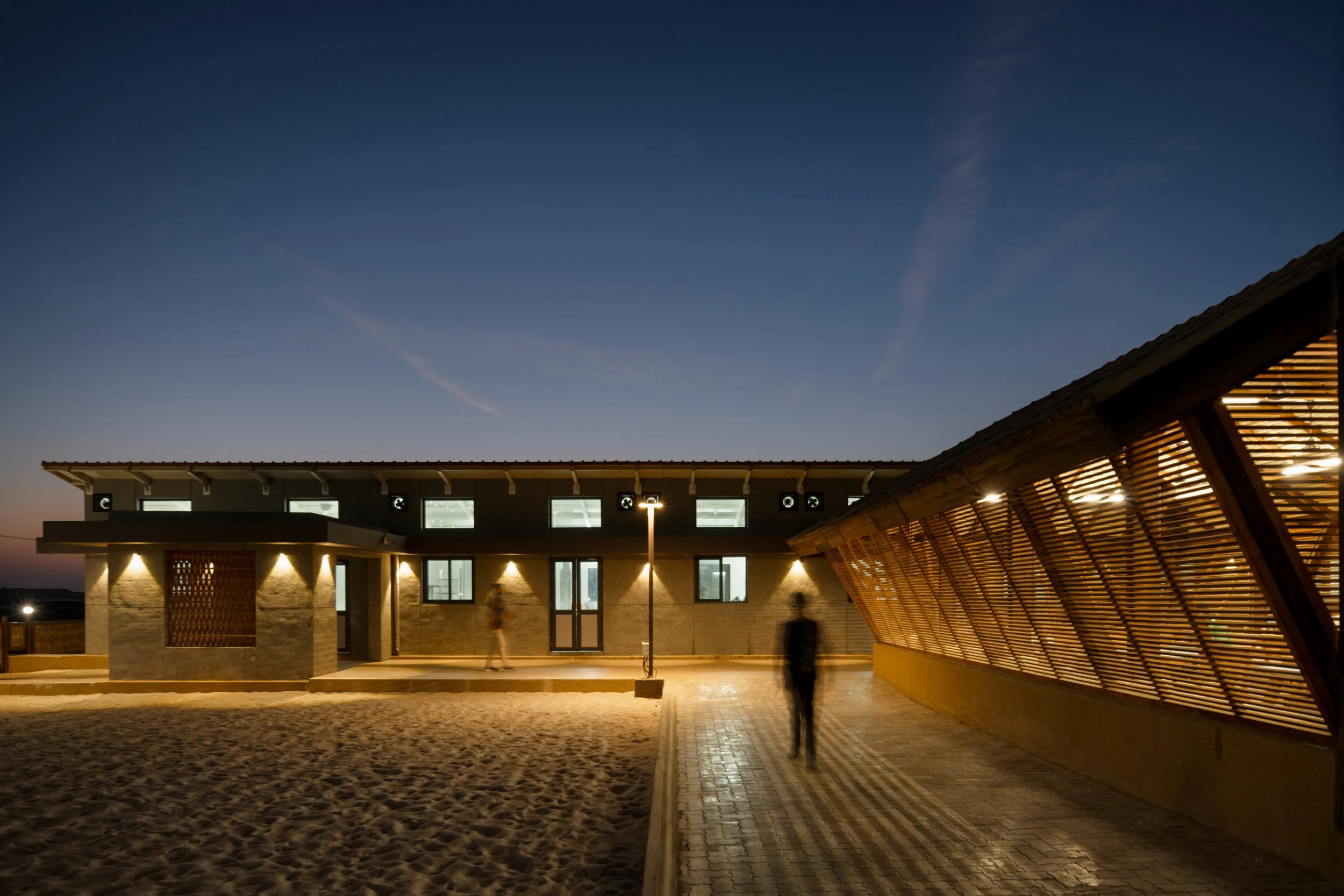
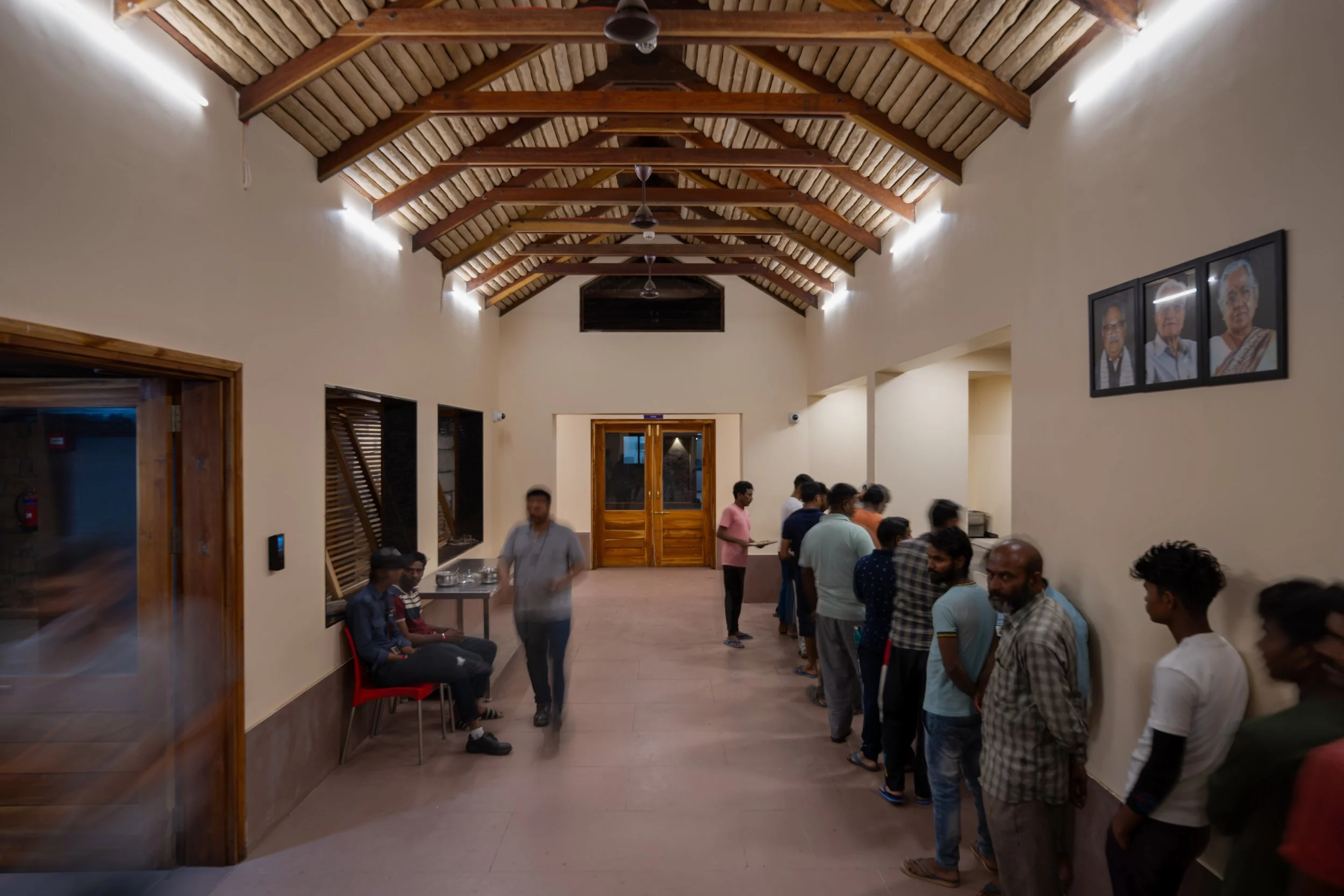
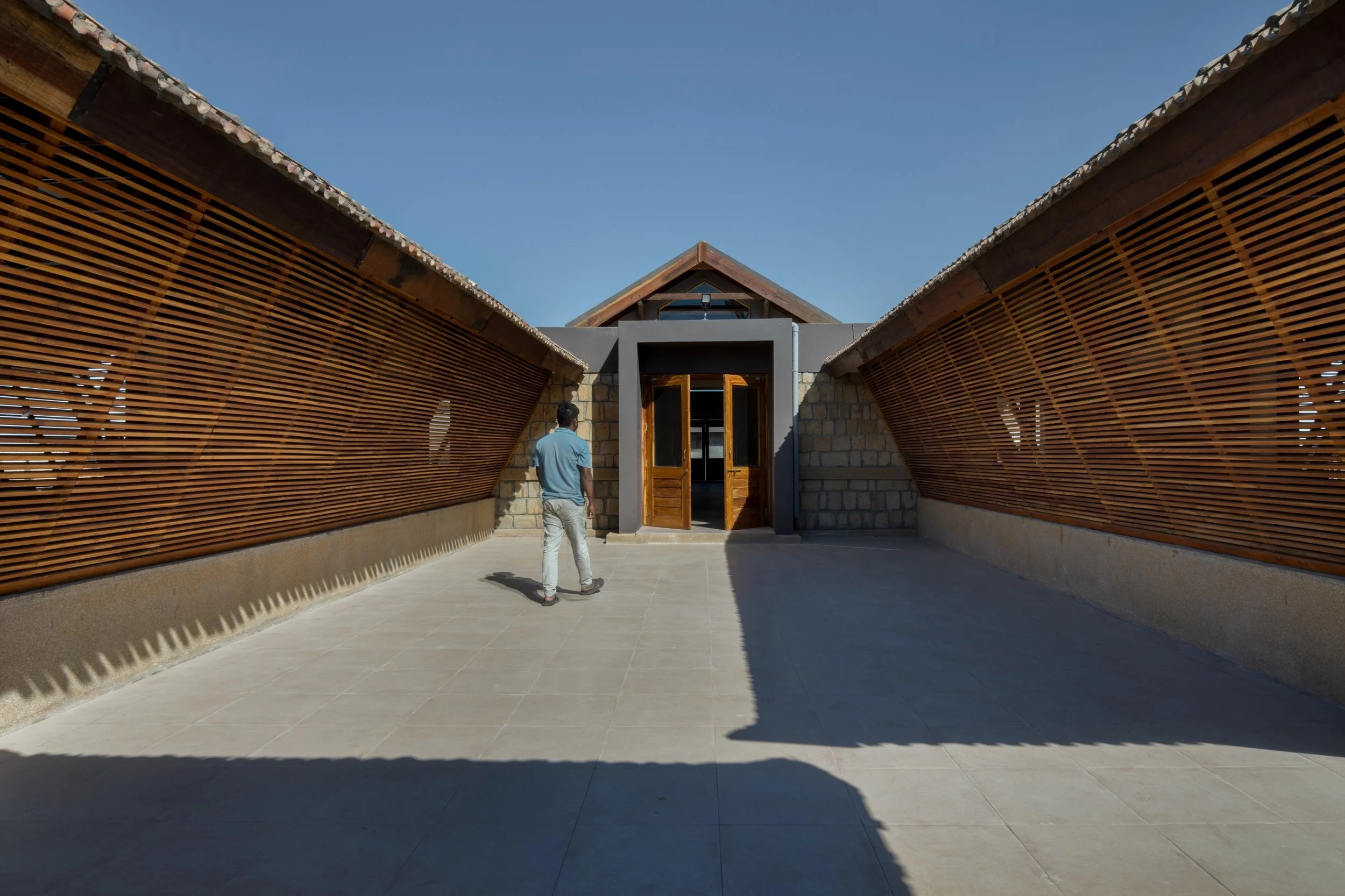
In the white expanse of the Rann of Kachchh, near Dhordo village, a resilient and sustainable canteen provides a pause for the staff and contract workers of Agrocel Industries. The canteen, located within the plant premises, addresses the extreme climatic conditions of the region while offering a comfortable and functional space. Four identical 50-seat dining bays, interconnected by a linear serving space, ensure efficient flow during peak hours, accommodating the large workforce with ease. The modular design not only facilitates scalability but also promotes a sense of community within the industrial setting.
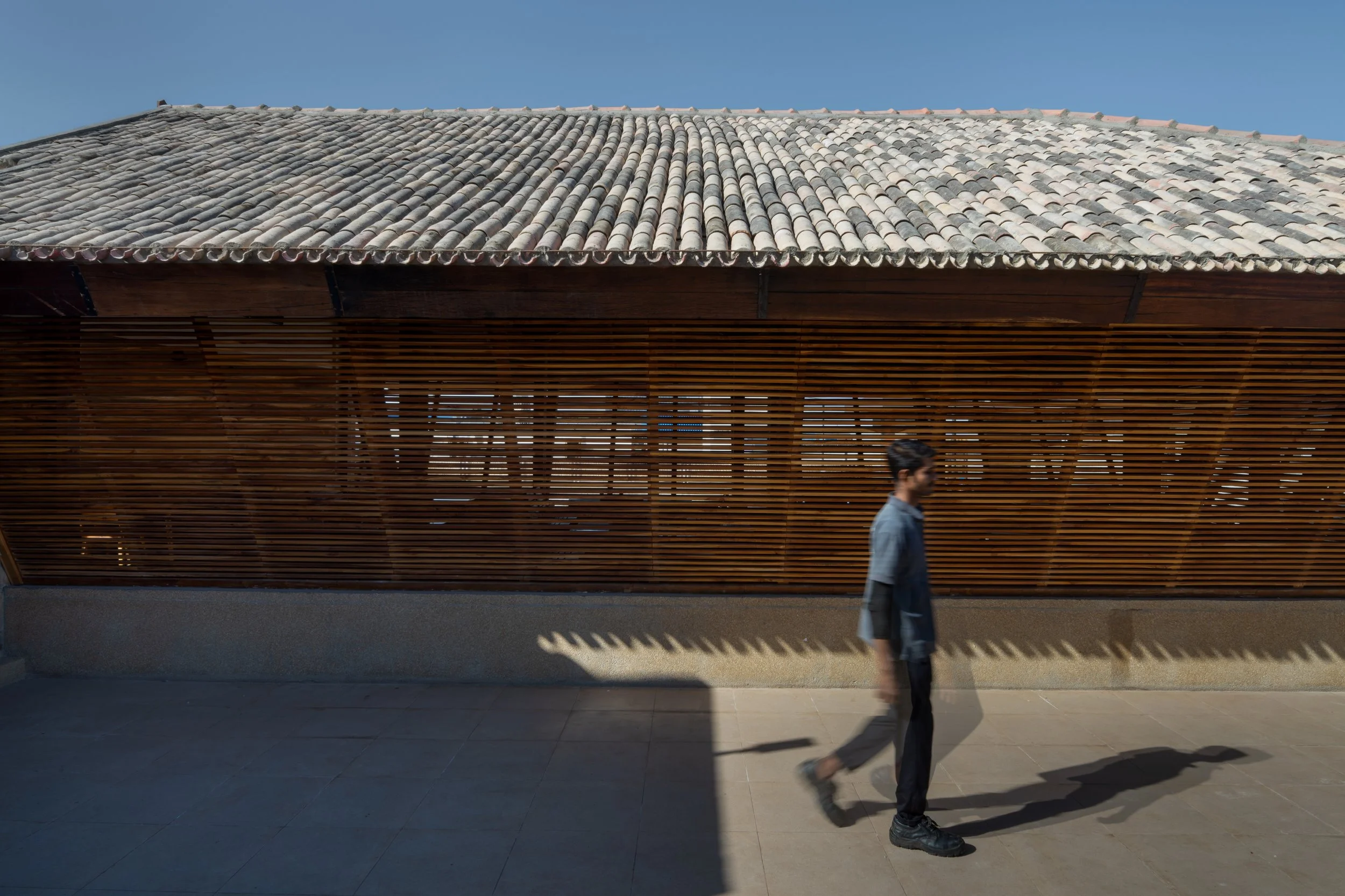
The roof, a key element of the design, is constructed from upcycled timber salvaged from ship-breaking yards. This sustainable approach extends the lifecycle and repurposes valuable materials. The roof features an innovative mud roll insulation system, a testament to the project’s commitment to environmental responsibility. The mud rolls, composed of wool, discarded jute bags, clay slip and lime, and upcycled wooden battens, provides exceptional thermal performance, mitigating the harsh desert heat. The use of wool helped promote local shepherds and create a renewed demand for their product, supporting a struggling local industry. The mud rolls not only provide insulation but add a beautiful, handcrafted texture to the roof with pastel earthy hues.
Horizontal wooden jaalis, fabricated from scrap timber sourced at local sawmills, clad the exterior of each dining bay. These breathable screens shade the interior, promote natural ventilation, and create a cool, comfortable environment.
The fabrication of the wooden jaalis and the mud rolls was a collaborative effort with Karigar Shala Trust, an educational organization dedicated to training school dropouts from across Gujarat and neighboring states in building crafts. This partnership not only provided valuable skills to the students but also ensured the use of local expertise and craftsmanship. The dining furniture, including chairs and tables, was also crafted by a Karigar Shala graduate, who is now a master carpenter.
The kitchen, designed as a separate, highly efficient block, is equipped to serve up to 900-1,000 meals, supporting multiple satellite dining areas within the Agrocel Industries premises. Its layout is meticulously planned, ensuring a logical progression from ingredient storage to pre-preparation and cooking, maintaining hygienic and streamlined operations. The exterior of the kitchen block, finished with stone chips instead of paint, withstands the corrosive saline environment. The puff panel roof provides insulation, and clerestory windows maximize natural light.
The architectural expression of the canteen offers a deliberate contrast to the surreal landscapes of the white desert and the industrial nature of the plant. This juxtaposition creates a unique space, a pause for reflection and respite, where workers and visitors can experience a sense of comfort and community amidst the harsh surroundings.

-
Size
8,600 sq.ft.
Material PalatteStone I Upcylced Timber I Country Tile l Mud Rolls
-
Design Lead: Ar. Satya Vaghela
Project Lead: Ar. Satya Vaghela & Ar. Mitesh Bhudiya
Design Team: Jyotsana Bhudia & Kiran Vaghela
Valued Collaborators: Karigar Shala Trust, Bhavesh Umraniya, Hirabhai, HK Aluminium (Now AluGlobe) Agrocel Civil Works Team & the various agencies and vendors that made implementing the project possible.
Photo Documentation: Dhrupad Shukla & Studio Dot Archives
-
Published
❋ ArchDaily - International
Factory Canteen Agrocel Dhordo / Studio Dot
Published, 24 July 2025
Curated by: Miwa Negoro
❋ ArchDaily - Brazil
Refeitório da Fábrica Agrocel Dhordo / Studio Dot
Published, 25th July 2025
Curated by: Miwa Negoro
❋ MasilGround - South Korea
❋ Tecture MAG- Japan
インドの砂漠に適応するサステナブルな社員食堂
A Sustainable Employee Cafeteria Adapted to the Indian Desert
Published, 9th August 2026
❋ STIR World - India & International
The Factory Canteen by Studio Dot backs local sourcing and climate resilience
Published, 3rd March 2026
Author: Pranjal Maheshwari
Arcticles
❋ ArchDaily
Building Optimism: Lessons from Climate Adaptation in 2025
Published, 21st December 2025
Author: Olivia Poston
❋ Kutchmitra (Newspaper)
કચ્છનાં ટકાઉ બાંધકામને ફરી વિશ્વનાં પોખણા
Published, 24th March 2026
Author: Keyur Vaidya
Awards
❋ ArchDaily - Building of the Year 2026
Industrial Architecture Category
Voted Top 5 Globally
❋ Tecture Awards 2026
Nominated & Ambassador’s Select
Longlist & Endorsed by three ambassadors.


“This project demonstrates explicitly how regional intelligence can be translated into contemporary architectural performance without abstraction or excess. Material choices and construction methods are grounded in local availability and climatic logic, allowing the building to regulate temperature, light, and air through passive means.”
“インドの化学産業企業の工場敷地内にある従業員のための食堂プロジェクト。屋根に船舶解体場から回収した木材を用いたり、廃材を活用した美しい表情を生み出している木製のルーバーなど、様々な地元資源の利用や再活用を行っています。また、これらは、学校中退者に建築工芸を教える教育機関との協働により制作されるなど、産業、教育、資源などあらゆるものが、統合され、美しい建築として立ち現れた素晴らしいプロジェクトだと思います。”
“Extremes often define adverse conditions and demand novel solutions to the challenges they raise. Yet these conditions are what nurture those solutions—gradually, but consistently, over time—that often make home within these landscapes, such as a cactus in a desert. The team at Studio Dot designed a canteen for a similar extreme: the Agrocel Factory in the vast salt desert of the Rann of Kachchh”
“近辺の船舶の解体材を再利用した屋根、羊毛や泥を利用した断熱材、廃材を使った格子スクリーンなど、地産地消のサスティナビリティに配慮した素材やローカルな建築技術を積極的に使った建築である。一方で、グリッドに基づく拡張可能なプラン構成、力強い断面形を軸としたシンメトリカルな構成、構造材の分節化などが洗練されており、ヴァナキュラーなテイストとコンテンポラリーな空間づくりが無理なく共存している点が印象深い。”
“工場の敷地内に佇む、働く人のための食堂です。一度に多人数が利用する空間は往々にして無機質な大空間になりがちですが、ここでは配膳スペースを核に4つのダイニングを放射状に配することで、住宅のような親密なスケール感を実現しています。壁面の木製ルーバーは、視線を遮りつつ自然換気を促し、過酷な日射と工場特有の風景を柔らかな光へと変容させます。計画・造形・素材の選定のすべてが、この環境への真摯な応答として見事に機能していると思います。”